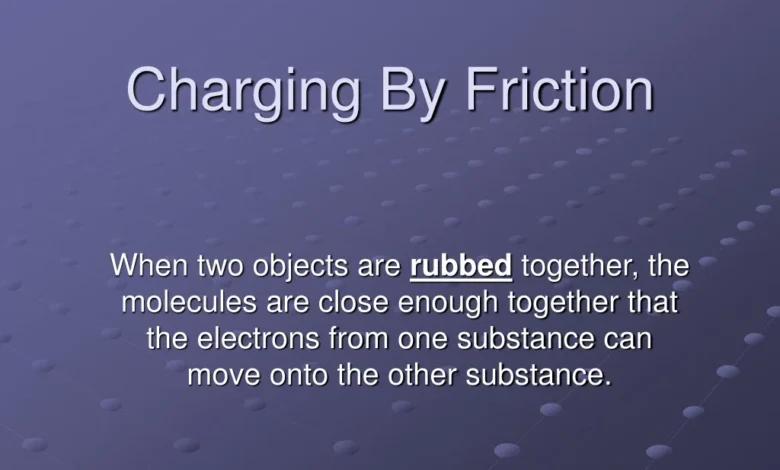
Electricity is one of the most fascinating forces in nature, and it powers almost everything we use today. But long before modern science explained electric currents and circuits, people were already intrigued by mysterious sparks that appeared after rubbing certain materials together. This phenomenon is known as Charging By Friction Key Word, and it is one of the simplest ways to understand how objects become electrically charged.
When we talk about Charging By Friction Key Word, we are referring to the process in which two neutral objects are rubbed against each other, causing electrons to transfer from one material to another. As a result, one object becomes positively charged while the other becomes negatively charged. This process forms the foundation of static electricity, which is not only a fun science experiment for students but also has significant applications in technology and everyday life.
In this article, we will explore the definition of Charging By Friction Key Word, how it works, examples from daily life, and how it differs from other charging methods such as conduction and induction. We will also look at its advantages, disadvantages, and practical applications. By the end, you’ll have a clear understanding of why this simple concept plays such a crucial role in both physics education and modern industries.
What is Charging By Friction Key Word?
Definition
Charging By Friction Key Word is the process of transferring electrons from one object to another through rubbing. This happens because different materials have different tendencies to attract or lose electrons. When two objects come into close contact and are rubbed together, the surface atoms interact, and some electrons are displaced. The object that gains extra electrons becomes negatively charged, while the one that loses electrons becomes positively charged.
This process occurs most effectively between insulating materials rather than conductors. Insulators like rubber, plastic, or wool hold on to charges for longer periods, which is why they are often used in static electricity demonstrations. Conductors, on the other hand, allow charges to move freely, making it difficult to observe lasting effects of Charging By Friction Key Word.
Historical Background
The idea of Charging By Friction Key Word dates back to ancient times. Around 600 B.C., the Greek philosopher Thales of Miletus observed that when amber was rubbed with fur, it could attract lightweight objects such as feathers. This was one of the earliest recorded observations of static electricity. Centuries later, scientists like William Gilbert and Benjamin Franklin expanded on these ideas, conducting experiments that helped build our modern understanding of electricity.
These early discoveries not only explained a curious natural effect but also paved the way for today’s vast field of electrical science. What started as simple rubbing experiments now influences everything from photocopiers to pollution control devices.
How Does Charging By Friction Key Word Work?
The Science Behind the Process
At the atomic level, matter is made up of protons, neutrons, and electrons. Protons carry a positive charge, electrons carry a negative charge, and neutrons are neutral. Normally, objects are electrically neutral because they contain equal numbers of protons and electrons. However, when two objects are rubbed together, electrons may transfer from one surface to the other.
This transfer happens because some materials hold electrons more tightly, while others release them easily. The triboelectric series is a chart that ranks materials based on their tendency to gain or lose electrons. For example, glass tends to lose electrons and become positively charged, while rubber tends to gain electrons and become negatively charged.
Step-by-Step Process
The process of Charging By Friction Key Word can be broken down into simple steps:
Contact: Two neutral objects are brought into contact and rubbed together.
Electron Transfer: Electrons move from the surface of one object to the other.
Charge Imbalance: The object losing electrons becomes positively charged, and the one gaining electrons becomes negatively charged.
Separation: When the objects are separated, they retain their new charges.
Factors Affecting the Process
Several factors influence the efficiency of Charging By Friction Key Word. The type of material is the most important, as some pairs of materials produce stronger charges than others. Environmental conditions also matter—static electricity is more noticeable in dry air because moisture allows charges to leak away more quickly. Additionally, the amount of contact, surface area, and pressure during rubbing can increase the intensity of the charge.
Real-Life Examples of Charging by Friction
Everyday Situations
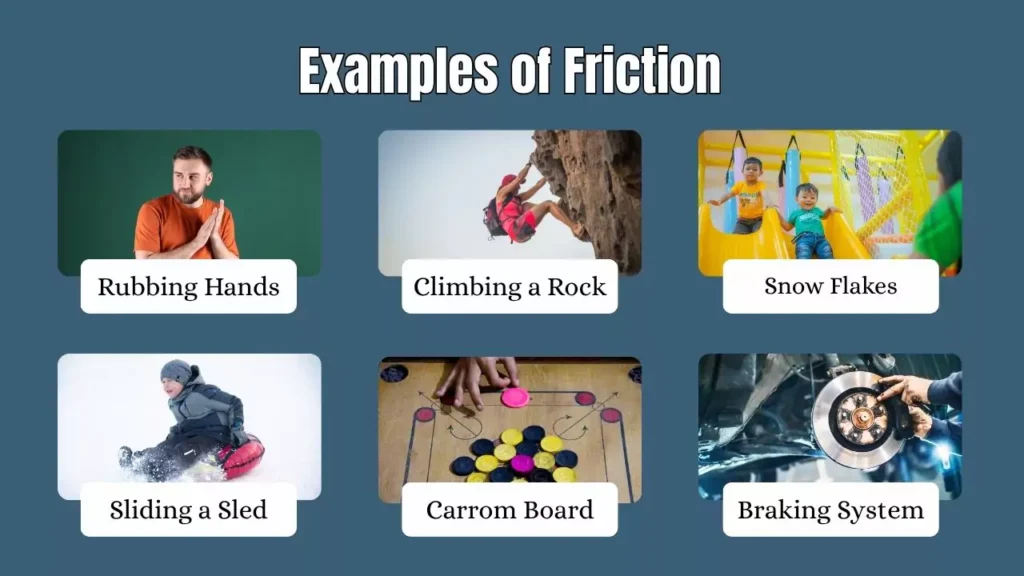
Charging By Friction Key Word is not just a scientific concept—it is something we encounter often in daily life. A common example is rubbing a balloon against your hair. The balloon becomes negatively charged and can make your hair stand on end because the strands repel each other. Similarly, walking on a carpet in socks and then touching a metal doorknob often results in a small electric shock due to static charge buildup.
Another example is clothes sticking together after coming out of a dryer. This happens because friction during the tumbling process transfers electrons between fabrics, causing them to cling due to opposite charges. While sometimes annoying, these examples clearly demonstrate the presence of static electricity in everyday activities.
Scientific and Practical Applications
Beyond daily experiences, Charging By Friction Key Word has practical uses in technology. Photocopiers and laser printers rely on static charges to transfer toner onto paper, creating sharp and precise images. Similarly, electrostatic painting uses charged paint particles to evenly coat surfaces, reducing waste and improving efficiency.
Another important application is in pollution control, where electrostatic precipitators use static charges to remove harmful particles from industrial smoke. This shows how a concept as simple as rubbing materials together can have life-saving applications in protecting the environment.
Charging by Friction vs. Other Methods of Charging
Charging by Conduction
Charging by conduction occurs when a charged object touches a neutral object, allowing electrons to flow between them. Unlike friction, this method does not require rubbing but does involve direct contact. For example, touching a charged rod to a neutral metal sphere will transfer electrons until balance is achieved.
Charging by Induction
Charging by induction, on the other hand, requires no direct contact. Instead, a charged object brought near a neutral one causes a rearrangement of charges within it. This method is commonly used in applications like grounding and lightning rods.
Summary Table
| Method | Requires Rubbing? | Requires Contact? | Example |
| Friction | Yes | Yes | Balloon on hair |
| Conduction | No | Yes | Metal rod to sphere |
| Induction | No | No | Lightning rod |
Advantages and Disadvantages of Charging by Friction
Advantages
The biggest advantage of Charging By Friction Key Wordn is its simplicity. It can be easily demonstrated in classrooms, making it an excellent teaching tool. It also plays a vital role in practical applications like photocopying and painting, where static charges are harnessed for efficiency and effectiveness.
Disadvantages
However, Charging By Friction Key Word has drawbacks. The charges produced are often temporary and can dissipate quickly, especially in humid environments. Static discharges can also be harmful, sometimes damaging sensitive electronic components or even causing sparks that may ignite flammable gases. While generally harmless to humans, these risks highlight the limitations of relying solely on friction-based charging.
Conclusion
Charging By Friction Key Word may seem like a simple school experiment, but its importance goes far beyond making balloons stick to walls or producing small sparks. From ancient discoveries to modern industrial applications, it has shaped our understanding of electricity and continues to influence technology today.
By studying how electrons move during friction, we gain insights into static electricity, material properties, and even environmental protection. Whether used in printers, pollution control, or basic science demonstrations, charging by friction remains one of the most accessible and practical concepts in physics.
FAQs About Charging by Friction
What is charging by friction in simple terms?
It is the process of rubbing two objects together to transfer electrons, leaving one positively charged and the other negatively charged.
Can all materials be charged by friction?
No, insulators like rubber, plastic, and wool show this effect best, while conductors lose charges quickly.
Why does hair stand up when rubbed with a balloon?
Electrons move from your hair to the balloon, leaving hair strands positively charged, which repel each other.
What are the three main methods of charging in physics?
Friction, conduction, and induction.
How does charging by friction differ from charging by conduction?
Friction requires rubbing, while conduction requires direct contact and transfer of electrons.
Is static electricity dangerous?
Usually not, but it can damage electronics or ignite flammable materials in certain conditions.
What are some devices that use charging by friction in real life?
Photocopiers, laser printers, and electrostatic precipitators.
You May Also Read: Jobs That Start With C