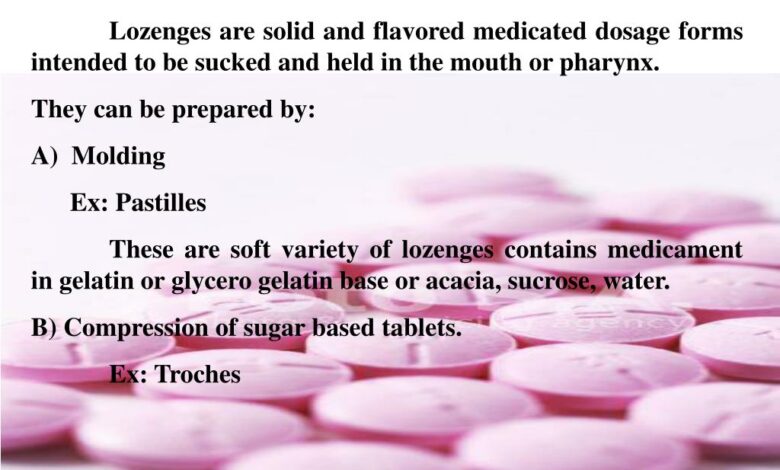
In the world of pharmaceutical sciences, dosage forms play a crucial role in determining how effectively a medication is delivered and absorbed by the body. One of the lesser-known but increasingly popular forms is the Troches Dosage Form are small, medicated lozenges designed to dissolve slowly in the mouth, releasing active ingredients that are absorbed through the oral mucosa. While tablets and capsules remain the most common drug delivery systems, Troches Dosage Form offer a unique alternative that combines ease of administration with personalization.
For patients, especially those who find it difficult to swallow conventional pills, Troches Dosage Form can make medication-taking a much more pleasant experience. They are often flavored and can be tailored by compounding pharmacies to meet the exact dosage needs of an individual. Healthcare providers also appreciate troches because they allow for flexible prescribing, especially in cases where precision or patient compliance is critical.
In this article, we’ll take a deep dive into the troches dosage form, exploring what they are, how they work, their benefits and limitations, methods of administration, and their role in compounding pharmacies. By the end, you will gain a thorough understanding of why Troches Dosage Form are becoming a preferred choice for certain treatments in both traditional and personalized medicine.
Understanding the Troches Dosage Form
What Are Troches?
Troches Dosage Form are medicated lozenges that dissolve slowly in the mouth, releasing active pharmaceutical ingredients directly into the bloodstream via the oral tissues. Unlike tablets that must be swallowed and absorbed through the digestive system, troches bypass first-pass metabolism in the liver, allowing for quicker and more efficient absorption. Historically, troches date back to ancient times when herbal and medicinal extracts were shaped into small lozenge-like preparations for therapeutic use. Over time, modern pharmaceutical science refined their formulation, making them more effective and patient-friendly.
Today, troches are typically made in small square or round shapes, often flavored to mask the bitterness of active drugs. Their unique design allows them to be sucked on slowly, ensuring gradual drug release. This controlled delivery is especially beneficial for medications requiring steady blood levels. For patients, troches provide a sense of comfort as they resemble candies or lozenges, making them more approachable compared to traditional pills.
Pharmaceutical Composition
The troches dosage form is composed of two main categories of ingredients: active pharmaceutical ingredients (APIs) and excipients. APIs are the therapeutic agents, such as hormones, antifungals, or pain medications. Excipients, on the other hand, are non-active ingredients like sweeteners, flavoring agents, and binding materials that provide shape, taste, and stability to the troche. Unlike lozenges, which may simply act as soothing agents for sore throats, Troches Dosage Form are specifically formulated to deliver measurable doses of medications.
What makes troches particularly versatile is their ability to be customized. Compounding pharmacies can adjust the strength of the drug, select preferred flavors, and even alter the shape depending on the patient’s needs. This makes them an excellent option for children, elderly patients, or those who require a precise but non-standardized dose. Compared to capsules or tablets, troches provide a more flexible and patient-centric approach to medication delivery.
Medical Uses and Applications

Conditions Commonly Treated with Troches
Troches are widely used across a variety of medical conditions due to their adaptability. One of the most common uses is in hormone replacement therapy (HRT), where hormones such as estrogen, progesterone, or testosterone are delivered in small, personalized doses. They are also used in antifungal treatments, especially for conditions like oral thrush, since the medication is absorbed directly at the site of infection.
In addition, troches can be compounded for pain management, often containing medications like opioids or muscle relaxants. Their gradual dissolution provides steady relief without overwhelming the system. Some patients also use troches for vitamin supplementation or immune-boosting therapies, where consistent, slow release ensures better absorption. Their versatility makes them a favorite in specialized and compounding medicine.
Advantages Over Other Dosage Forms
The advantages of the troches dosage form are numerous. Firstly, troches are easy to administer, especially for patients who struggle to swallow pills. This includes children, older adults, or individuals with medical conditions like dysphagia. Secondly, because the medication is absorbed directly through the oral mucosa, troches provide faster onset of action compared to oral tablets.
Another significant advantage is customization. Compounding pharmacies can create troches in virtually any strength or flavor, ensuring optimal patient compliance. Unlike standardized commercial medications, troches are truly personalized. Additionally, their pleasant taste and discreet use make them more acceptable to patients, increasing adherence to prescribed therapies.
Limitations and Considerations
Despite their many benefits, troches are not without limitations. For one, not all medications are suitable for delivery via troches. Drugs that require high doses or those unstable in oral formulations may not be ideal candidates. There are also concerns regarding stability, as troches can soften or lose potency if not stored properly.
Taste can sometimes be an issue, particularly with bitter or strong-tasting medications. While flavoring agents help, not every taste can be fully masked. Furthermore, troches require patient cooperation to allow the medication to dissolve slowly, which might be challenging for children or impatient users. Healthcare providers must consider these factors before prescribing troches.
Administration and Dosage Guidelines
How to Use Troches Properly
Using troches correctly is essential for their effectiveness. Patients are advised to place the troche in their mouth, typically between the cheek and gum, and allow it to dissolve slowly. Unlike chewing gum or candy, troches should not be chewed or swallowed whole, as this disrupts their gradual release mechanism. Dissolution usually takes 15–30 minutes, depending on the formulation.
During this time, patients should avoid eating or drinking to prevent premature dilution of the medication. Healthcare providers often emphasize consistency—taking troches at the same time each day ensures stable blood levels of the drug. Proper technique ensures maximum absorption and therapeutic benefit.
Dosage Determination
Troches are highly individualized when it comes to dosage. The appropriate dose depends on several factors such as the patient’s age, weight, overall health, and medical condition. For example, hormone troches may be prescribed in microgram or milligram amounts depending on hormone levels, while pain management troches are dosed differently.
Because of this variability, self-adjusting the dose is not recommended. Patients must strictly follow their physician or pharmacist’s instructions. The beauty of troches lies in their ability to be finely tuned, but this also means professional guidance is essential. Incorrect dosing can lead to reduced effectiveness or adverse side effects.
Safety and Side Effects
Like all medications, troches can cause side effects, though these are often mild and manageable. Common side effects may include local irritation, dry mouth, or changes in taste. In rare cases, patients may experience allergic reactions to the ingredients used. Additionally, certain medications delivered via troches can interact with other drugs, so a thorough medical history should be reviewed before prescribing.
Safety also depends on storage. Troches should be kept in cool, dry places, away from children or pets, since their candy-like appearance may be tempting. When used correctly and under supervision, troches are generally safe and effective for long-term therapy.
Troches in Pharmaceutical Compounding
Role of Compounding Pharmacies
One of the biggest reasons troches have gained popularity is their role in compounding pharmacy. Compounding allows pharmacists to create customized medications tailored to individual patient needs. Unlike mass-produced drugs, compounded troches can be adjusted in dosage strength, flavor, and even combination of medications.
This is particularly valuable in cases where commercial products are unavailable or unsuitable. For instance, a patient requiring a lower-than-standard dose of a hormone can have a troche compounded specifically for them. Compounding enhances flexibility, making troches a cornerstone in personalized medicine.
Quality Control and Regulation
While compounding offers numerous benefits, it also raises concerns about quality control. Troches prepared in compounding pharmacies must meet strict guidelines to ensure safety and effectiveness. Pharmacies follow standards set by organizations like the USP (United States Pharmacopeia) to maintain consistency.
Although compounded medications are not FDA-approved in the same way commercial drugs are, licensed pharmacies adhere to rigorous protocols. Patients are encouraged to use reputable compounding pharmacies that prioritize quality and safety.
Future Trends in Troches Dosage Form
Looking ahead, the future of troches is promising. Advances in pharmaceutical technology are improving stability, flavoring, and absorption methods. With the rise of personalized medicine, troches are expected to play an even greater role in tailored therapies. Healthcare providers are also recognizing the benefits of this dosage form, which may lead to wider adoption beyond compounding settings.
Conclusion
Troches are a unique and valuable dosage form that bridges the gap between convenience and effectiveness. They offer personalized medication options, faster absorption, and improved patient compliance. While they are not suitable for every drug or every patient, their adaptability makes them a strong contender in modern medicine.
As healthcare shifts toward personalized care, troches will likely continue to grow in importance. Patients interested in troches should always consult with their healthcare providers to determine if this dosage form is right for them. With proper guidance, troches can be a safe, effective, and even pleasant way to take medication.
Frequently Asked Questions (FAQs)
What is the main difference between troches and lozenges?
Troches are designed for delivering medications with precise dosages, while lozenges are typically for soothing throat irritation without strong medicinal effects.
Can children use troches safely?
Yes, but only under professional supervision. Dosage and flavor can be customized for children through compounding.
How long does it take for a troche to dissolve?
On average, a troche takes between 15–30 minutes to dissolve completely.
Are troches available in standard pharmacies, or only through compounding?
Most troches are obtained through compounding pharmacies due to their customized nature.
Do troches have any interactions with food or beverages?
It’s best to avoid eating or drinking while the troche is dissolving to ensure maximum absorption.
Can troches be flavored to mask unpleasant tastes?
Yes, compounding pharmacies can add flavors such as fruit, mint, or vanilla to improve palatability.
What should I do if I miss a troche dose?
Follow your healthcare provider’s instructions. Typically, you should take it as soon as you remember unless it’s close to the next scheduled dose.
Are troches more effective than tablets or capsules?
Effectiveness depends on the medication and the condition being treated. In many cases, troches offer faster absorption and better compliance
You May Also Read: Greek Mati